Why location matters more than hardware
The single biggest variable in Starlink RV performance is where you park. The same dish, same plan, same time of day can deliver 180 Mbps at a remote BLM site and 25 Mbps at a crowded RV resort — not because of hardware differences, but because of how many other Starlink users share your coverage cell.
Understanding regional speed patterns helps you set realistic expectations and, more importantly, choose campsites that consistently deliver better connectivity.
This guide compiles real-world Starlink Roam speed data from RV users across the continental United States, organized by region and terrain type, with practical guidance on what affects your speeds and how to maximize them.
How to run accurate speed tests
Before looking at regional data, it is important to test your own setup correctly.
Two tests, not one
- Starlink app speed test: Measures performance from the dish to the Starlink network. This isolates the satellite connection from your local WiFi.
- Device speed test (fast.com or speedtest.net): Measures end-to-end performance from your device through WiFi, through the dish, to the internet.
If the Starlink app shows 150 Mbps but your laptop shows 50 Mbps, the bottleneck is your WiFi — not the satellite connection. This is extremely common and usually fixable with a better router or a wired ethernet connection.
Testing protocol for consistent results

EAZUSE Starlink Ethernet Adapter (Gen 3/Mini)
Ethernet Adapter
Waterproof SPX-to-RJ45 adapter for Starlink Gen 3 and Mini, adds a wired Ethernet port without cutting cables.
$26.09
Amazon price when we checked on Oct 9, 2026
Check today's price on Amazon(opens Amazon in a new tab)- Run tests at three times: morning (7 AM), midday (12 PM), and evening (8 PM)
- Test from a device connected via ethernet (not WiFi) for the most accurate dish-to-internet measurement
- Run each test three times and average the results
- Note your obstruction percentage from the Starlink app — even 2% obstructions affect speeds
What the numbers mean
| Metric | Good | Acceptable | Poor |
|---|---|---|---|
| Download speed | 80–220 Mbps | 30–80 Mbps | Under 30 Mbps |
| Upload speed | 10–25 Mbps | 5–10 Mbps | Under 5 Mbps |
| Latency | 20–40 ms | 40–70 ms | Over 70 ms |
| Jitter | Under 10 ms | 10–20 ms | Over 20 ms |
| Packet loss | 0% | Under 0.5% | Over 0.5% |
Speed expectations by region
The following data represents aggregated results from RV community speed reports and Starlink user databases during 2025–2026. Speeds vary daily, but these ranges reflect consistent patterns.
Western United States
| Terrain | Typical download | Typical upload | Typical latency | Notes |
|---|---|---|---|---|
| Desert (NV, UT, AZ) | 100–200 Mbps | 10–20 Mbps | 25–40 ms | Lowest congestion, best speeds nationwide |
| Mountain passes (CO, MT) | 60–150 Mbps | 8–15 Mbps | 30–50 ms | Obstructions from canyon walls reduce consistency |
| Pacific coast (CA, OR, WA) | 40–120 Mbps | 5–15 Mbps | 25–45 ms | Higher user density near coast reduces speed |
| National parks (Yellowstone, Zion) | 30–100 Mbps | 5–12 Mbps | 30–50 ms | Variable — depends on tourist season density |
| BLM land (open desert) | 120–220 Mbps | 15–25 Mbps | 20–35 ms | Consistently the fastest Starlink speeds in the US |
Best western spots for speed: Southern Utah BLM land, Nevada desert dispersed sites, eastern Oregon high desert.
Midwest
| Terrain | Typical download | Typical upload | Typical latency | Notes |
|---|---|---|---|---|
| Great Plains (KS, NE, SD) | 80–180 Mbps | 10–20 Mbps | 25–40 ms | Low population density, excellent speeds |
| Farmland (IA, IL, IN) | 60–150 Mbps | 8–18 Mbps | 25–45 ms | Good coverage, moderate user density |
| Lake areas (MN, WI, MI) | 40–120 Mbps | 5–15 Mbps | 30–50 ms | Summer tourist crowds slow speeds at popular lakes |
| Small town RV parks | 50–130 Mbps | 8–15 Mbps | 25–45 ms | Less congestion than coastal RV parks |
Best midwest spots for speed: Western South Dakota (Badlands area), Kansas tallgrass prairie, rural Nebraska.
Southeast
| Terrain | Typical download | Typical upload | Typical latency | Notes |
|---|---|---|---|---|
| Coastal (FL, SC, NC) | 30–100 Mbps | 5–12 Mbps | 30–50 ms | High snowbird density in winter slows speeds |
| Appalachian (TN, NC, GA) | 40–120 Mbps | 5–15 Mbps | 30–55 ms | Mountain terrain creates minor obstruction challenges |
| Gulf coast (AL, MS, LA) | 50–130 Mbps | 8–15 Mbps | 25–45 ms | Less congested than Atlantic coast |
| Interior (AR, MS) | 60–150 Mbps | 8–18 Mbps | 25–40 ms | Low Starlink density, good speeds |
Best southeast spots for speed: Mississippi and Arkansas interior, early morning in the Florida Keys, mountain dispersed sites in north Georgia.
Northeast
| Terrain | Typical download | Typical upload | Typical latency | Notes |
|---|---|---|---|---|
| New England (ME, VT, NH) | 50–140 Mbps | 8–15 Mbps | 25–45 ms | Dense tree cover in summer increases obstructions |
| Mid-Atlantic (PA, NY, NJ) | 30–100 Mbps | 5–12 Mbps | 30–50 ms | Highest overall user density on the east coast |
| Coastal Maine | 60–150 Mbps | 8–18 Mbps | 25–45 ms | Surprisingly good — lower Starlink density than southern NE |
| Adirondacks / Green Mountains | 50–130 Mbps | 8–15 Mbps | 30–50 ms | Good when above tree line, variable in valleys |
Best northeast spots for speed: Coastal Maine, Vermont hilltop sites, Adirondack clearings.
Speed patterns by terrain type
Open desert and plains — consistently fastest
With zero obstructions and typically low user density, open desert and plains deliver the most consistent Starlink performance. Download speeds regularly exceed 150 Mbps, and upload speeds stay above 15 Mbps.
Mountain valleys — most variable
Canyon walls and ridgelines block satellite visibility from certain angles. Speeds swing dramatically depending on your position within the valley. Test from multiple positions if your campsite allows it.
Dense forest — obstruction-limited
Even without congestion, heavy tree cover creates 5–15% obstructions that reduce effective throughput by 20–40%. Raising the dish on a tall mount helps considerably.
See our obstruction tips guide for strategies.
Coastal areas — congestion-limited
Coastal campgrounds and RV parks have the highest Starlink user density, especially during tourist seasons. Evening speeds (6–10 PM) can drop to 20–40 Mbps at popular locations.
Time of day speed patterns
Across all regions, time of day creates a predictable speed curve.
Typical daily speed pattern
| Time block | Relative speed | Why |
|---|---|---|
| 6–9 AM | Fastest (90–100% of max) | Few users awake and streaming |
| 9 AM–12 PM | Fast (80–95% of max) | Users leaving camp for daytime activities |
| 12–5 PM | Good (70–90% of max) | Moderate usage, many users away from camp |
| 5–7 PM | Declining (50–80% of max) | Users returning, starting dinner and screens |
| 7–10 PM | Slowest (40–70% of max) | Peak streaming hours — everyone is watching Netflix |
| 10 PM–12 AM | Recovering (60–85% of max) | Users going to bed, traffic declining |
| 12–6 AM | Near-max (85–100% of max) | Minimal activity |
Practical takeaway
Schedule bandwidth-heavy activities (large downloads, system updates, cloud backups) for early morning or late night. If you work remotely, mornings consistently deliver the best video call quality.
Seasonal speed variations
Summer (June–August)
- Slowest overall season at popular campgrounds
- Peak RV travel means maximum Starlink user density
- National parks and coastal areas most affected
- Remote boondocking sites remain fast
Fall (September–November)
- Speeds improve as RV traffic drops after Labor Day
- Best balance of pleasant weather and low congestion
- Leaf fall in deciduous forests temporarily improves obstruction clearance
Winter (December–February)
- Fastest speeds at non-snowbird locations
- Florida and Arizona slow down as snowbirds arrive
- Snow on dish triggers heating mode (increased power draw but no speed impact once melted)
Spring (March–May)
- Gradually increasing congestion as RV season begins
- Still Good speeds at most locations until Memorial Day weekend
- Budding trees begin increasing obstructions in April–May
How to maximize your Starlink speed
Quick wins
- Minimize obstructions. Every 1% of obstruction costs you measurable speed and reliability. Get the dish as high as possible.
- Use ethernet, not WiFi, for speed tests and critical work. WiFi bottlenecks are the most common false speed complaint.
- Avoid peak hours for heavy usage. Shift downloads and updates to early morning.
- Reboot the dish if speeds drop significantly. The Starlink app has a "Reboot" button that takes 3–5 minutes.
- Enable bypass mode and use a quality travel router. The Starlink router's WiFi is the bottleneck in many setups.
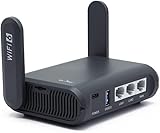
GL.iNet GL-AXT1800 Slate AX
Travel Router
$119.99
Amazon price when we checked on Oct 9, 2026
Check today's price on Amazon(opens Amazon in a new tab)Strategic campsite selection
- Choose sites with fewer Starlink users (smaller campgrounds, dispersed camping)
- Arrive at popular campgrounds midweek when user count is lower
- Ask campground hosts or check RV forums for connectivity reports at specific parks
For campsite selection based on sky view, see our obstruction tips guide.
Tracking your own speed history
Using the Starlink app
The Starlink app records speed test history, latency trends, and uptime statistics. Check the "Statistics" tab regularly to see your speed patterns over days and weeks.
Creating a personal speed log
Keep a simple log of your speed tests at each campsite:
- Date and time
- Campsite name and location
- Obstruction percentage
- Download / upload / latency
- Weather conditions
- Notes (congestion, nearby obstructions, etc.)
Over time, this log helps you identify which locations and conditions give you the best performance — invaluable for return trips and route planning.
What to do next
Run speed tests at your next three campsites using the two-test protocol above. Compare your results to the regional data in this guide. If your speeds are significantly below regional expectations, the issue is likely obstructions or WiFi limitations rather than Starlink coverage.
- Fix obstructions in Starlink RV obstruction tips
- Improve WiFi throughput in How to extend Starlink WiFi range
- Diagnose connection issues in Starlink RV troubleshooting
Related reading
- Starlink RV obstruction tips
- How to extend Starlink WiFi range in your RV
- Starlink RV troubleshooting guide
- Starlink vs cellular hotspot for RV
Affiliate disclosure
This page may include affiliate links. If you purchase through them, we may earn a commission at no extra cost to you.